

There was a time when sitting down felt simple. You didn’t think about your lower back. You didn’t brace yourself before standing up. You didn’t measure your day by how much discomfort you could tolerate.
But back pain has a quiet way of changing everything.
And if you’re caring for aging parents, supporting your spouse, or stepping into your own season after 50, you begin to realize something important:
Comfort is not luxury.As an Amazon associate, I earn from qualifying purchases.
It is protection.
Today I want to talk gently about what back pain really is, why it becomes more common with age, and when it’s time to invest in real support — not just another pillow.
What Is Back Pain (Really)?
Back pain isn’t just soreness.
It can show up as:
- Lower back stiffness in the morning
- Sharp pain when standing up
- Muscle fatigue after sitting too long
- Radiating discomfort into hips or legs
- Tightness that makes sleep difficult
For many adults over 50, it becomes part of daily life — especially if there’s arthritis, spinal changes, past injuries, or years of physical work.
The problem isn’t only the pain.
It’s how pain limits independence.
Why Back Pain Gets Worse With Age
There are a few gentle truths our bodies teach us:
- Muscles lose strength over time
Core muscles that support the spine weaken if we sit often or move less. - Spinal discs lose cushion
The soft discs between vertebrae thin out, reducing shock absorption. - Joint stiffness increases
Arthritis and inflammation can reduce flexibility. - Getting up becomes harder
The simple act of standing from a low chair can strain the lower back and knees.
This is why the type of seating in your home matters more than most people realize.
A soft couch that sinks too low may feel cozy at first — but it can make standing painful.
A chair without lumbar support forces your spine to work harder.
Over time, the wrong seating adds to the problem.
When Is It Time to Consider a Lift Recliner?
You don’t wait until you “can’t walk.”
You consider better support when:
- You push off armrests to stand
- You avoid sitting because getting up hurts
- You feel pressure in your lower back after 20–30 minutes
- You need heat on your back almost daily
- You feel unsteady rising from low furniture
This is where a supportive power lift recliner becomes more than furniture.
It becomes a tool for independence.When Back Pain Changes Your Daily Life: What to Know, Why It Happens, and When to Seek Real Support
There was a time when sitting down felt simple. You didn’t think about your lower back. You didn’t brace yourself before standing up. You didn’t measure your day by how much discomfort you could tolerate.
But back pain has a quiet way of changing everything.
And if you’re caring for aging parents, supporting your spouse, or stepping into your own season after 50, you begin to realize something important:
Comfort is not luxury.
It is protection.
Today I want to talk gently about what back pain really is, why it becomes more common with age, and when it’s time to invest in real support — not just another pillow.
What Is Back Pain (Really)?
Back pain isn’t just soreness.
It can show up as:
- Lower back stiffness in the morning
- Sharp pain when standing up
- Muscle fatigue after sitting too long
- Radiating discomfort into hips or legs
- Tightness that makes sleep difficult
For many adults over 50, it becomes part of daily life — especially if there’s arthritis, spinal changes, past injuries, or years of physical work.
The problem isn’t only the pain.
It’s how pain limits independence.
Why Back Pain Gets Worse With Age
There are a few gentle truths our bodies teach us:
- Muscles lose strength over time
Core muscles that support the spine weaken if we sit often or move less. - Spinal discs lose cushion
The soft discs between vertebrae thin out, reducing shock absorption. - Joint stiffness increases
Arthritis and inflammation can reduce flexibility. - Getting up becomes harder
The simple act of standing from a low chair can strain the lower back and knees.
This is why the type of seating in your home matters more than most people realize.
A soft couch that sinks too low may feel cozy at first — but it can make standing painful.
A chair without lumbar support forces your spine to work harder.
Over time, the wrong seating adds to the problem.
When Is It Time to Consider a Lift Recliner?
You don’t wait until you “can’t walk.”
You consider better support when:
- You push off armrests to stand
- You avoid sitting because getting up hurts
- You feel pressure in your lower back after 20–30 minutes
- You need heat on your back almost daily
- You feel unsteady rising from low furniture
This is where a supportive power lift recliner becomes more than furniture.
It becomes a tool for independence.
A Gentle Look at the MCombo Oversized Power Lift Recliner


The MCombo Oversized Power Lift Recliner R7510 is designed specifically for big and tall adults who need extra width, strong support, and gentle assistance standing.
Here’s why it stands out for back pain:
1️⃣ Power Lift Assistance
The chair tilts forward smoothly to help you stand without straining your lower back or knees.
No sudden pushing. No jerking movements.
Just controlled support.
2️⃣ Heat for Lower Back Relief
Heat increases blood flow and relaxes tight muscles — especially helpful for stiffness in the lumbar area.
If you’ve ever placed a heating pad on your back and sighed in relief, you understand how important this is.
3️⃣ Massage Function
Gentle vibration helps reduce muscle tension and improve circulation after long sitting periods.
It’s not a spa machine.
It’s daily comfort built into your chair.
4️⃣ Oversized & Wide Seating
Many standard recliners are too narrow. This one is designed for larger frames, giving room to sit without pressure on hips or thighs — which also reduces strain on the lower back.
5️⃣ USB & Type-C Ports + Cup Holders
Because healing also means convenience.
No bending to reach outlets.
No twisting awkwardly.
Everything stays within reach.
Why This Matters for Soft Living
If you believe in calm homes and gentle strength, then your furniture should support your body — not fight against it.
Back pain can quietly reduce:
- Confidence
- Movement
- Social interaction
- Sleep quality
- Emotional well-being
The right chair restores small freedoms:
- Standing without fear
- Reading longer
- Watching TV comfortably
- Napping without stiffness
- Feeling secure
Sometimes the most powerful change in a home is replacing the one piece of furniture that causes daily discomfort.
A Final Thought
Back pain doesn’t mean weakness.
It means your body needs better support.
If you or someone you love is:
- Struggling to rise from seating
- Using heat daily
- Avoiding sitting because it hurts
- Or simply tired of pushing through discomfort
Then it may be time to upgrade from “just a chair” to something designed for healing support.
Soft living isn’t about decorating for beauty alone.
It’s about choosing comfort that protects your future.
And sometimes, that begins exactly where you sit.When Back Pain Changes Your Daily Life: What to Know, Why It Happens, and When to Seek Real Support
There was a time when sitting down felt simple. You didn’t think about your lower back. You didn’t brace yourself before standing up. You didn’t measure your day by how much discomfort you could tolerate.
But back pain has a quiet way of changing everything.
And if you’re caring for aging parents, supporting your spouse, or stepping into your own season after 50, you begin to realize something important:
Comfort is not luxury.
It is protection.
Today I want to talk gently about what back pain really is, why it becomes more common with age, and when it’s time to invest in real support — not just another pillow.
What Is Back Pain (Really)?
Back pain isn’t just soreness.
It can show up as:
- Lower back stiffness in the morning
- Sharp pain when standing up
- Muscle fatigue after sitting too long
- Radiating discomfort into hips or legs
- Tightness that makes sleep difficult
For many adults over 50, it becomes part of daily life — especially if there’s arthritis, spinal changes, past injuries, or years of physical work.
The problem isn’t only the pain.
It’s how pain limits independence.
Why Back Pain Gets Worse With Age
There are a few gentle truths our bodies teach us:
- Muscles lose strength over time
Core muscles that support the spine weaken if we sit often or move less. - Spinal discs lose cushion
The soft discs between vertebrae thin out, reducing shock absorption. - Joint stiffness increases
Arthritis and inflammation can reduce flexibility. - Getting up becomes harder
The simple act of standing from a low chair can strain the lower back and knees.
This is why the type of seating in your home matters more than most people realize.
A soft couch that sinks too low may feel cozy at first — but it can make standing painful.
A chair without lumbar support forces your spine to work harder.
Over time, the wrong seating adds to the problem.
When Is It Time to Consider a Lift Recliner?
You don’t wait until you “can’t walk.”
You consider better support when:
- You push off armrests to stand
- You avoid sitting because getting up hurts
- You feel pressure in your lower back after 20–30 minutes
- You need heat on your back almost daily
- You feel unsteady rising from low furniture
This is where a supportive power lift recliner becomes more than furniture.
It becomes a tool for independence.
A Gentle Look at the MCombo Oversized Power Lift Recliner
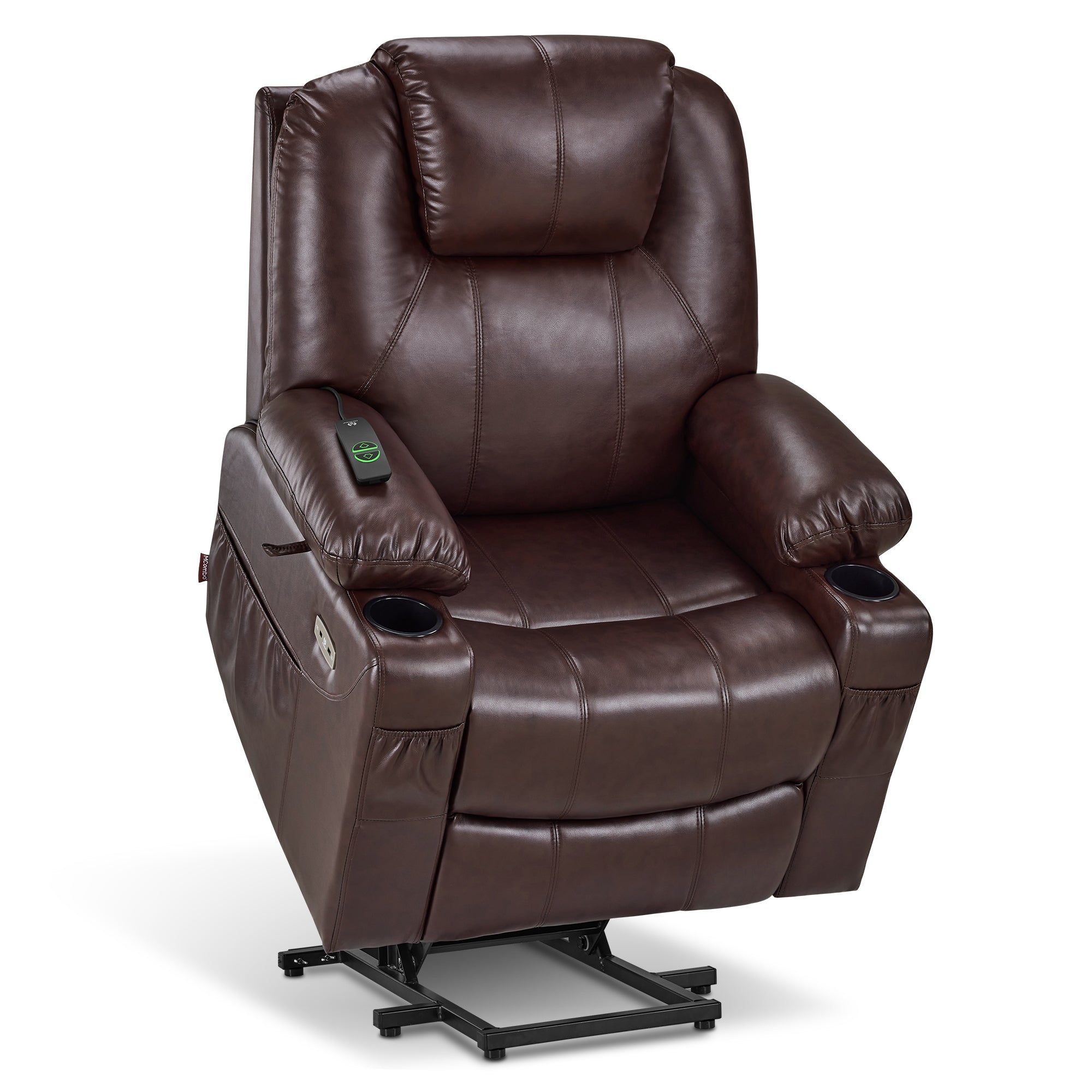
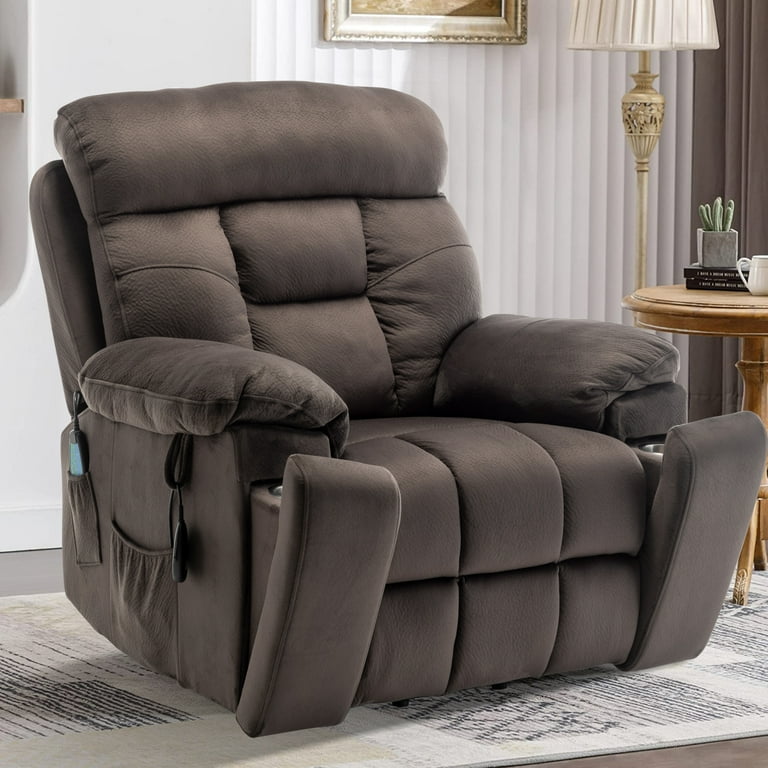
The MCombo Oversized Power Lift Recliner R7510 is designed specifically for big and tall adults who need extra width, strong support, and gentle assistance standing.
Here’s why it stands out for back pain:
1️⃣ Power Lift Assistance
The chair tilts forward smoothly to help you stand without straining your lower back or knees.
No sudden pushing. No jerking movements.
Just controlled support.
2️⃣ Heat for Lower Back Relief
Heat increases blood flow and relaxes tight muscles — especially helpful for stiffness in the lumbar area.
If you’ve ever placed a heating pad on your back and sighed in relief, you understand how important this is.
3️⃣ Massage Function
Gentle vibration helps reduce muscle tension and improve circulation after long sitting periods.
It’s not a spa machine.
It’s daily comfort built into your chair.
4️⃣ Oversized & Wide Seating
Many standard recliners are too narrow. This one is designed for larger frames, giving room to sit without pressure on hips or thighs — which also reduces strain on the lower back.
5️⃣ USB & Type-C Ports + Cup Holders
Because healing also means convenience.
No bending to reach outlets.
No twisting awkwardly.
Everything stays within reach.
Why This Matters for Soft Living
If you believe in calm homes and gentle strength, then your furniture should support your body — not fight against it.
Back pain can quietly reduce:
- Confidence
- Movement
- Social interaction
- Sleep quality
- Emotional well-being
The right chair restores small freedoms:
- Standing without fear
- Reading longer
- Watching TV comfortably
- Napping without stiffness
- Feeling secure
Sometimes the most powerful change in a home is replacing the one piece of furniture that causes daily discomfort.
A Final Thought
Back pain doesn’t mean weakness.
It means your body needs better support.
If you or someone you love is:
- Struggling to rise from seating
- Using heat daily
- Avoiding sitting because it hurts
- Or simply tired of pushing through discomfort
Then it may be time to upgrade from “just a chair” to something designed for healing support.
Soft living isn’t about decorating for beauty alone.
It’s about choosing comfort that protects your future.
And sometimes, that begins exactly where you sit.(As an Amazon Associate, I earn from qualifying purchases.)